

Deluge Vu
Resilience, but not for everyone.

Gilbane recently won a $1 billion contract to redevelop two public housing complexes in Norfolk, Virginia. Alongside turning affordable units into market-rate, the new site will have "innovative tidal and stormwater control" and "blue-green" flooding infrastructure. On the surface it seems like a win-win but we've seen this story before.
I wrote about this extensively in my forthcoming book, examining how multifamily investors actively shape climate adaptation decisions in Norfolk, and how they cash in on those decisions. I argue projects like these often rely on a specific narrative logic that frames displacement of poor renters as a technical necessity for environmental safety.
The last time Norfolk did this was with Tidewater Gardens, a 618 public housing complex whose redevelopment plan promised residents a climate resilient future.
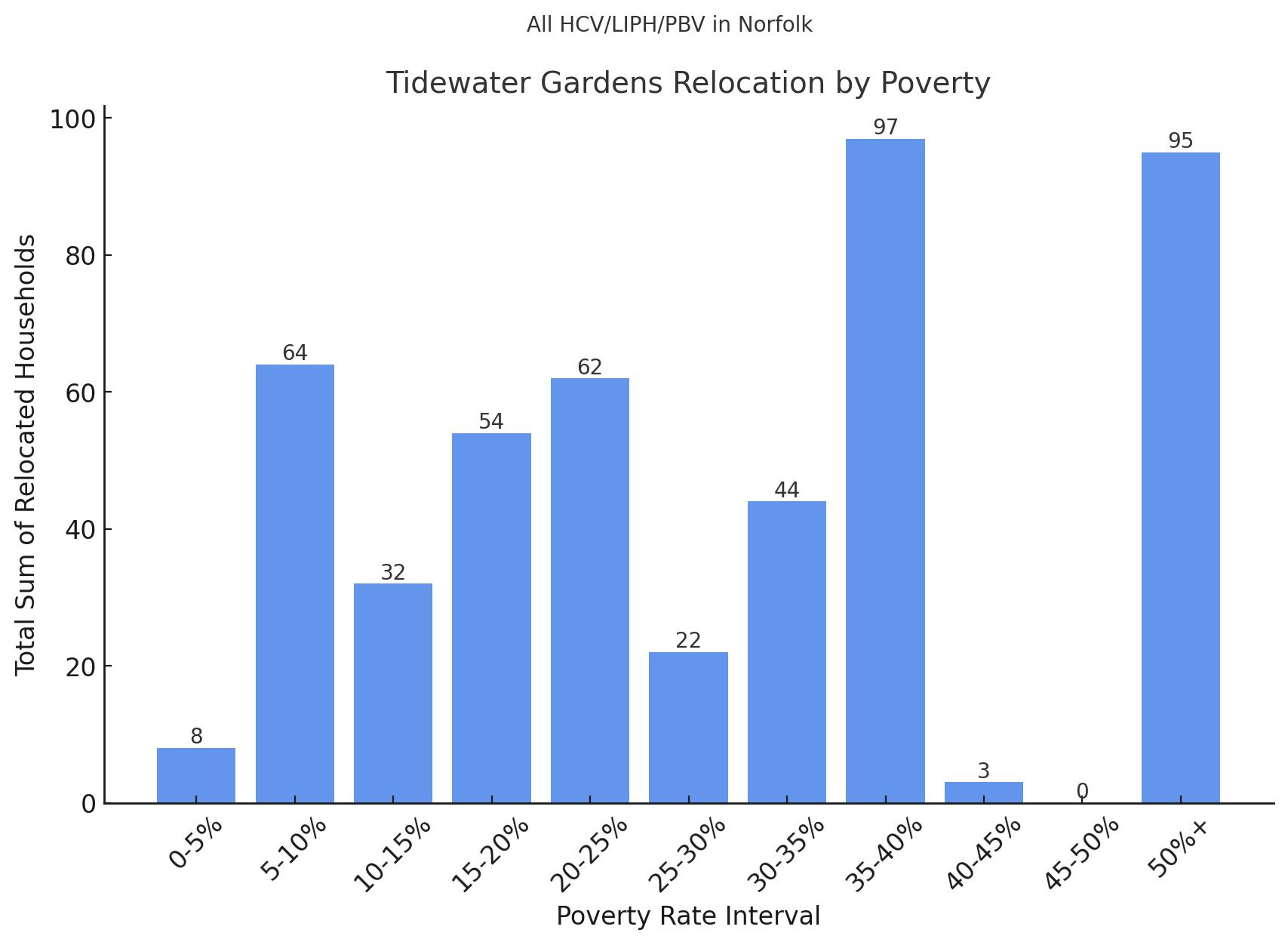
But relocation data shows poor residents were simply relocated to other poor, flood-prone neighborhoods:
1) Despite claims of moving residents to "opportunity areas" (defined as <40% poverty), data showed a clustering of displaced families in neighborhoods with 39% poverty. Half of all households remained in high-poverty zones (>30%). The relocation reinforced racial divides too, with 71% of households relocated to neighborhoods with a high concentration (>62%) of African Americans.
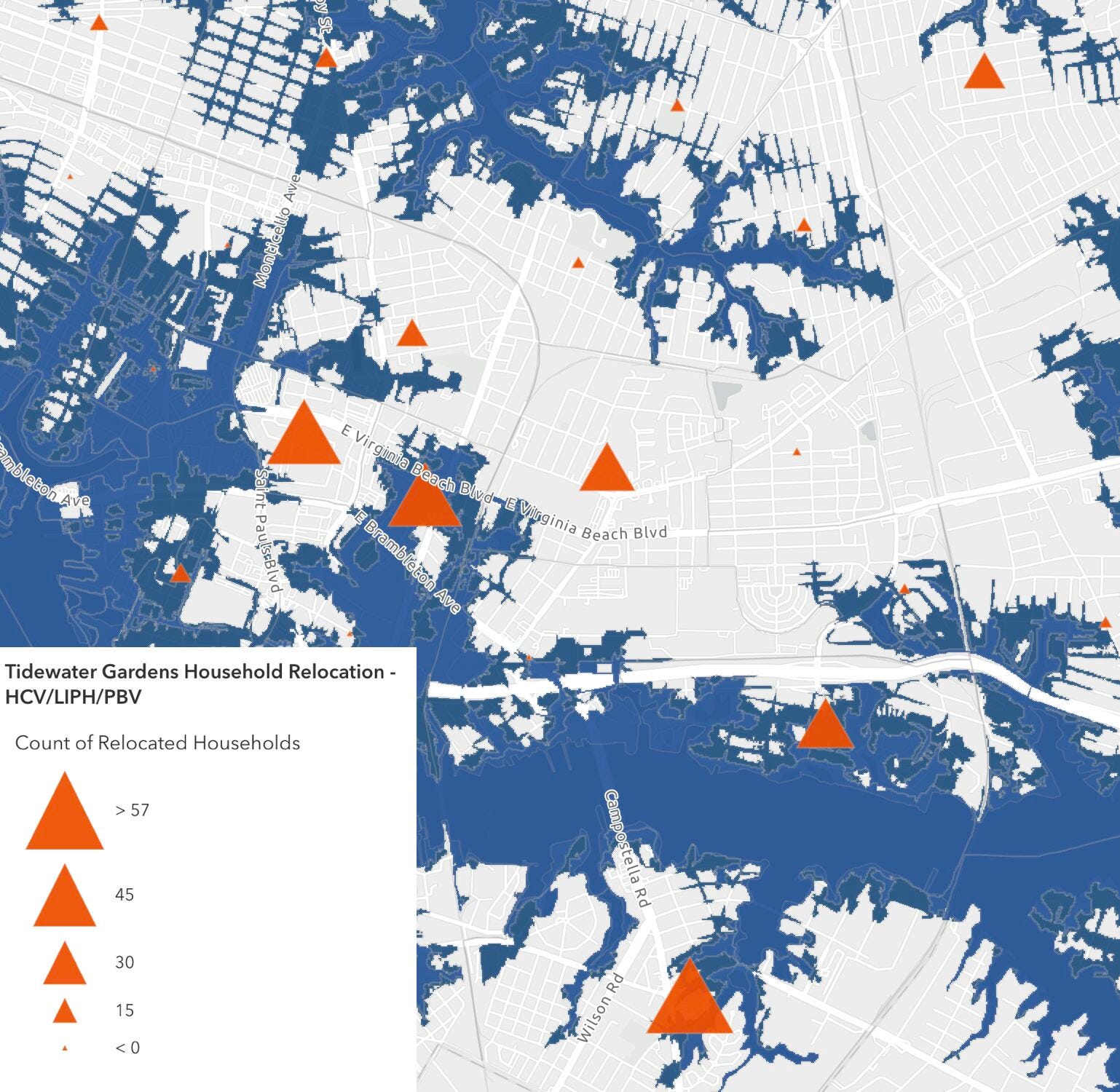
2) The single largest concentration of displaced Tidewater Gardens households (57 families) were relocated to housing that is officially marked for managed retreat due to its high flood risk.
A just resilient city cannot simultaneously serve as an engine of profit and a bulwark for those whose exclusion is required to safeguard those profits.
Thank you for writing about this! I'm currently working on a project about the St Paul's Transformation Area and the planning history of the geography.